The seal of the Diocese of John and Paul

The seal of the Diocese of John and Paul

The seal of the Diocese of John and Paul bears the inscription of Lake Eger and Krems on the banks of the Danube River. The 17th century seal depicts the martyrs John and Paul, both wearing armor and helmets, one holding a sword and the other holding a palm branch.
The Victory of Crassus Greek Coloane

The Victory of Crassus Greek Coloane

The Victory of Krates Greek Stoa is an ancient Greek architectural relic. This colonnade is located in the Holy Land of Delphi, near the Temple of Apollo. It was built between 478 BC and 470 BC to commemorate the Athenians' victory in the Persian Wars.
The Monument of Intef

The Monument of Intef

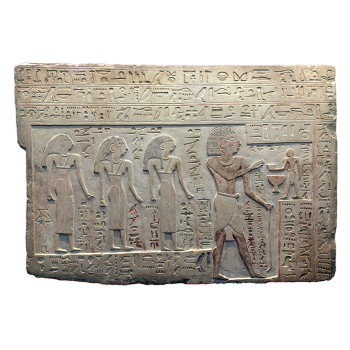
The Intef Stele is a stone tablet from the Middle Kingdom period of ancient Egypt, dating back to around 2000-1988 BC. It records the life and achievements of Intef. The top of the stone tablet bears the name of Nebhepetre Mentuhotep II, the founder of the Middle Kingdom. Intef claimed to be his servant and served as the fortress supervisor.
The Theban stone tablet from the 3rd century BC

The Theban stone tablet from the 3rd century BC

The painted reliefs of the Bakhrihat Shepsut Temple

The painted reliefs of the Bakhrihat Shepsut Temple

The pictographic characters carved by colored painting have repeated lintel reliefs with the words neb ankh, djed, and was written on them; All life, stability, and governance. The relief is located in the northwest corner of the column hall of the Hassel Church in the Hadbahrihat Shepsut Temple in Egypt.
Horus Statue

Horus Statue

This stone amulet of the Holy Falcon of Horus in ancient Egypt from the 21st to the 16th century BC is very common. The eyes are made of semi precious stones, dark blue lapis lazuli, and black obsidian.
Aldawin's medieval clock

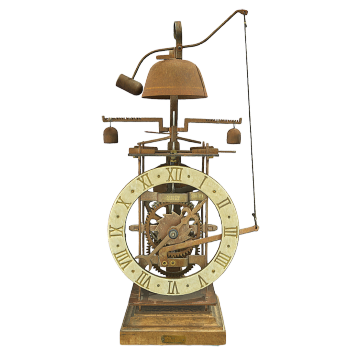
Aldawin's medieval clock

Ankhu Stone Tablet

Ankhu Stone Tablet

The Ankhu Stele, housed in the Nelson Atkins Museum of Art, depicts an early artwork of a deceased husband and wife standing at a table filled with food, a necessary ritual for the continuation of the afterlife.
Panzhuli Divine Bronze Mask

Panzhuli Divine Bronze Mask

The "Panzhuli Divine Bronze Mask" describes an artwork that showcases the head of a wild boar, adorned with exquisite headpieces and earrings. The headband is decorated with a row of cobra heads. The earrings on the mask are also decorated with cobra heads, with one earring featuring a character image and the other earring featuring an elephant head.
Half Armor of 16th Century Germany

Half Armor of 16th Century Germany

Half armor in 16th century Germany was a unique type of equipment, during which the design of armor underwent significant changes influenced by Italy and the Netherlands. Previously, armor emphasized elegance and thinness, but in this decade, people have begun to emphasize the existence and materiality of the human body. This new trend is particularly evident in German equipment.
Kikaradi Ceramic Vase

Kikaradi Ceramic Vase

The replica of the Cycladic ceramic vase is a modern representation of ceramic art from the ancient Greek Cycladic civilization. The Cycladic civilization (around 3200 BC to 2000 BC) meticulously crafted its exquisite marble carvings through modern craftsmanship, aiming to preserve the aesthetic features and craftsmanship of the original works, allowing the public to appreciate these ancient artworks up close. These replicas are not only loved by art enthusiasts as decorations and collectibles, but also used for education and exhibitions to help people understand and learn about the artistic achievements of the Cycladic civilization.
Ferdinand Alvarez de Toledo Memorial Medal
Ferdinand Alvarez de Toledo Memorial Medal

Fernando Á lvarez de Toledo, the third Duke of Alvarez. The commemorative medal features a bust of the Duke in armor, made in 1567 to commemorate his tenure as governor of the Netherlands in 1557. Duke Ferdinand Alvar (1507-1582) was a Spanish nobleman, general, and politician. During the Eighty Years' War, he suppressed a rebellion against Spanish rule in the Netherlands. He served as the Governor General of Spain and the Netherlands from 1567 to 1573.
Gottfried Marshall Memorial Medal

Gottfried Marshall Memorial Medal

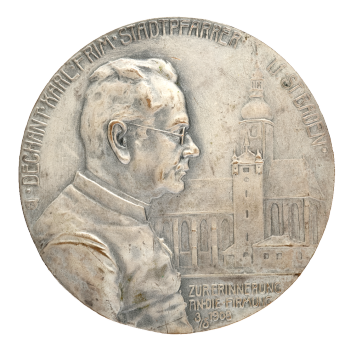
The front displays a bust of Godfrey Marschall. EXZELL DR. GODFRED MARSCHELL WEIHBISHOF U. GENELLIKAR VON WIEN, meaning "Outstanding Dr. Gottfried Marcel, Bishop and General Agent of Vienna". Issued in 1908, the material is bronze and silver plated.
Emperor Joseph recites the seal in the first century

Emperor Joseph recites the seal in the first century

A silver medal in honor of Emperor Joseph I, commemorating the birth of Emperor Joseph I. The inscription on the edge of the medal reads "Memoria AVGVSTISSIMAE NATIVITATIS IOSEPHI ARCHIDVCIS AVSTRIAE D 26 IVLII A 1678", meaning "In memory of the birth of the most esteemed Joseph, Archduke of Austria, on July 26, 1678".
John Adam Moser Clan Emblem Seal

John Adam Moser Clan Emblem Seal

John Adam Moser was an 18th century German jurist, administrative official, and writer who had a profound understanding and contribution to the legal and administrative system of his time. This seal not only serves as proof of personal identity, but also reflects the level of seal art and craftsmanship at that time. The handle is engraved with the words "1751" to indicate the year of production.
Seal of the 17th Century Craftsmen's Guild
Seal of the 17th Century Craftsmen's Guild

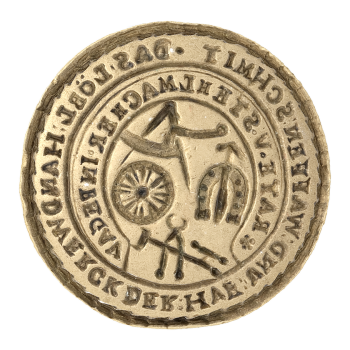
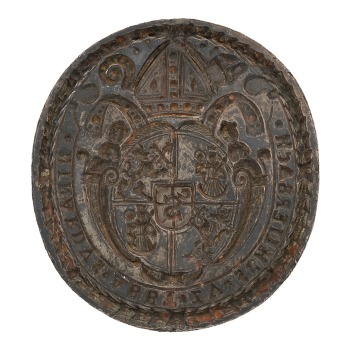
This seal is the seal of the blacksmith and armored craftsman, as well as the wheel manufacturing and car making guild of Pugao, which dates back to the 17th to 18th centuries. The seal represents the guilds of blacksmiths and armors (Huf - und Waffenshmiede) and wheel makers and wheelmakers (Rad - und Stellmacher) in Pugao.
Seal of the abbot of Schlierbach Monastery

Seal of the abbot of Schlierbach Monastery

This seal is part of the history of the Schlierbach Monastery, and its design and decoration reflect the religious art and badge studies of the late 17th century. The emblem and dean's emblem on the seal indicate the religious status of the monastery and the authority of the dean. The Baroque style decoration added artistic beauty and also reflected the popular art style at that time.
Baron von Schreck's silver seal

Baron von Schreck's silver seal

This seal is the family emblem of Baron von Schreck, usually featuring elements such as unicorns and lions representing the nobility and power of the noble family, while the knowledge tree may symbolize the wisdom or knowledge inheritance of the family. The helmet with a crown is a symbol of aristocratic status, while the intricate decorative patterns showcase artistic and craftsmanship.
Seal of the Society of Kellenberger Seymandel
Seal of the Society of Kellenberger Seymandel

The design of this postal seal reflects a certain social phenomenon or sense of humor in 19th century Austria, expressing a joke about a certain social role or family relationship by placing characters in cages. Simandel is an Austrian proverb used humorously to refer to a spouse who is obedient to the mistress of the household.
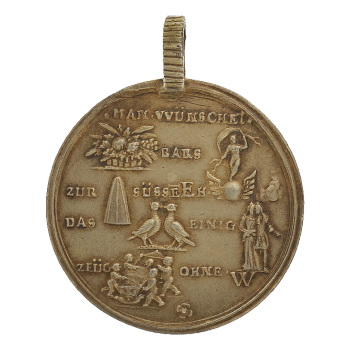
18th Century Gilded Gold and Silver Medal Commemorative Medal

18th Century Gilded Gold and Silver Medal Commemorative Medal

The inscription on this 18th century medal expresses good wishes for love and marriage, and the design of the visual puzzle adds artistic and entertaining elements. The material and exquisite craftsmanship of gilded gold and silver indicate that this is a customized souvenir for special occasions or important figures. At that time, such medals were given as gifts to show respect or celebrate. It is currently housed in the Heiligenkreis Monastery Museum.
Karl Liebertner Memorial Medal

Karl Liebertner Memorial Medal

Karl Liebertner is a figure who has made significant contributions in the fields of music or art, and the design of this medal reflects his achievements and influence. The inscription and pattern on the back indicate a close connection between Liebleitner and children's music, as he was a composer, music educator, or figure related to children's music activities. Laurel leaves usually symbolize victory and honor, while vines and rose bushes add artistic and decorative elements.
Triangle Double Dragon Wedding Vase

Triangle Double Dragon Wedding Vase

Chinese vases are not only elegant and exquisite in shape, but also highly distinctive in decorative arts. They are usually painted with patterns such as landscapes, flowers, birds, and figures, reflecting the aesthetic taste and painting skills of ancient China. There are many types of glazes and glazes for Chinese vases, from the famous blue and white porcelain of the Ming Dynasty to the celadon glaze of the Song Dynasty. Each color and glaze reveals its era and dynasty. As an important part of ancient Chinese civilization, Chinese vases not only showcase the luxury of ancient Chinese society and the vitality of the Maritime Silk Road, but also witness the development of Chinese porcelain making techniques.
Ancient vase

Ancient vase

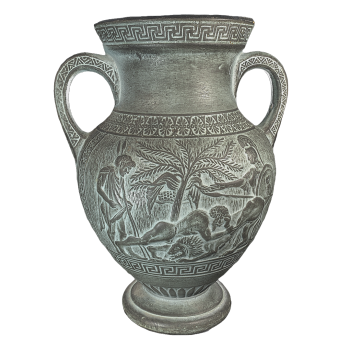
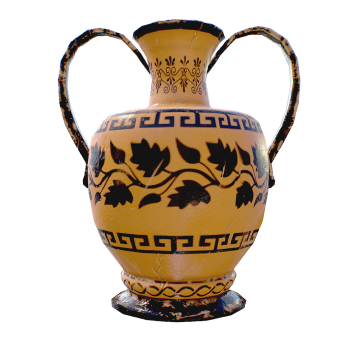
Ancient vases are works of art in the long river of history. They not only carry practical functions, but also contain rich cultural and artistic values. These vases may be made of different materials such as ceramics, bronze, glass, or stone, and their form and decorative style reflect the aesthetic taste and craftsmanship level of a specific era. In ancient times, vases were commonly used to hold flowers, spices, or as ritual vessels for religion and ceremonies. Over time, many ancient vases have become valuable discoveries in archaeological excavations, providing important clues for us to understand the lifestyle, social customs, and artistic achievements of ancient civilizations.
Greek neck bottle

Greek neck bottle

It is a ceramic container from ancient Greece, with an iconic long neck and two vertical handles, usually located on the shoulders. This dual ear bottle design is very suitable for carrying and pouring liquids such as oil, wine, or water. Greek necklaces not only have a wide range of uses in daily life, but also play an important role in religious ceremonies and funerals. They are often used as burial objects in tombs to hold liquids for worship. The surface of Greek neck vases is often painted with exquisite patterns, including mythological scenes, battle scenes, or daily life scenes, providing us with a window to understand ancient Greek culture and art.